
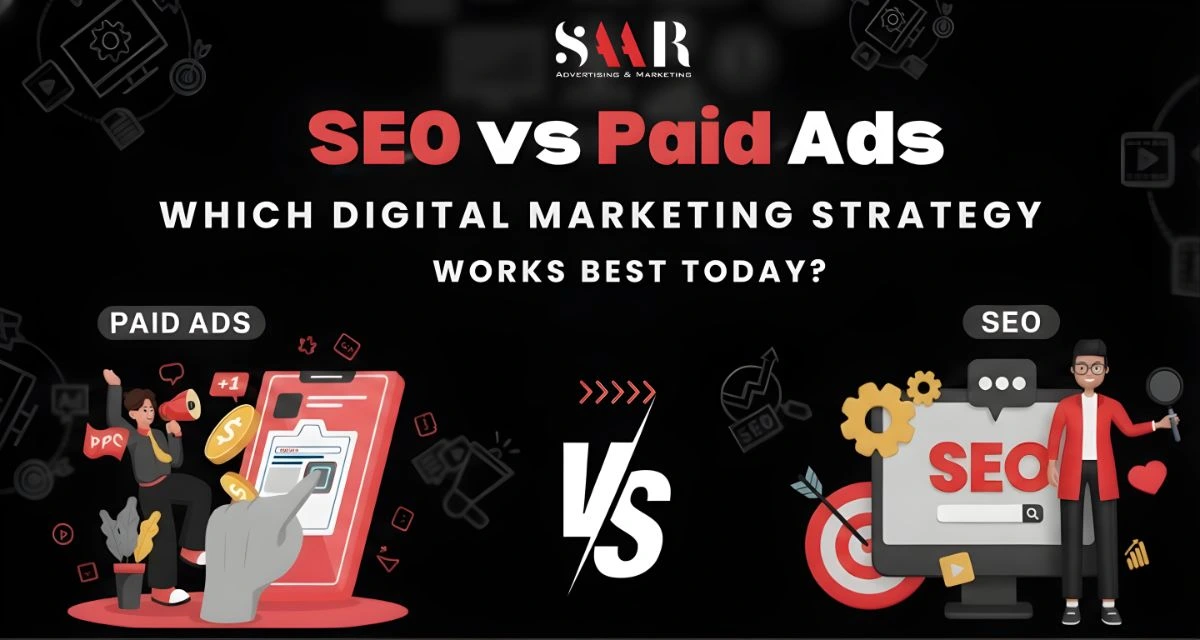
SEO vs Paid Ads: Which Digital Marketing Strategy Works Best Today?
Published on: January 14, 2026
In the present digital age, every business is in search of an improved method to ensure the business gets noticed digitally. Now with the rise in competition & restricted spending on the marketing process, the need for making the right decision has become more important than ever before & this has made the topic “SEO vs Paid Ads” the focal point of every digital marketing talk.
Though the end goal of both approaches is the same – increasing traffic & leads, the method implemented differs significantly. While some companies are interested in having direct exposure, others seek to establish trust. Thus to make the right decision, it’s necessary to have a clear understanding of how each method works, its points of differentiation & its importance in the modern marketplace.
So before comparing results, let us first understand the basics of both methods.
What Is SEO?
SEO is the process of improving a website so that it ranks higher on search engines organically. This means you don’t pay for clicks but earn traffic by being relevant & helpful to users.
SEO mainly focuses on
• Quality content creation
• Website optimisation
• Keyword optimisation
• Improving user experience & page speed
• Building backlinks & online authority
What Are Paid Ads?
Paid ads, on the other hand, involve paying platforms like Google or social media networks to display your ads. You are charged based on clicks or impressions.
Paid advertising typically includes
• Google search ads
• Display ads
• Social media ads
• Retargeting campaigns
This clear difference forms the base of the SEO vs PPC comparison.
How Quickly are the Results Visible?
One of the first differences businesses notice is how quickly results appear.
How Paid Ads Perform
- Ads start showing almost immediately
- Traffic increases as soon as the campaign goes live
- Ideal for product launches or urgent campaigns
However, once the budget stops, traffic stops too.
How SEO Performs
- Takes time to build rankings
- Requires consistency & patience
- Delivers traffic even when spending is reduced
This clear difference between speed & sustainability is at the heart of SEO vs Paid Ads.
What Does it Cost in Both Methods?
Cost is often the deciding factor for many businesses.
Paid Ads Cost Model
- You pay for every click
- Competitive industries mean higher costs
- Budgets must be ongoing to maintain visibility
SEO Cost Model
- Investment goes into content, optimisation & expertise
- No direct cost per click
- Returns improve over time
When businesses compare Google Ads vs SEO, SEO often proves more cost-efficient in the long run.
Comparison Based on Readability, Trust & User Behaviour
Users don’t interact with ads & organic results in the same way.
How Users View Paid Ads
- Clearly marked as sponsored
- Sometimes skipped or ignored
- Useful but often seen as promotional
How Users View Organic Results
- Perceived as more trustworthy
- Higher engagement in many industries
- Builds brand authority naturally
This difference plays a major role when asking which is better SEO or paid ads for long-term credibility.
Comparison Based on Targeting & Control
Both strategies attract users but in different ways.
Paid Ads Targeting
- Location-based targeting
- Interest & behaviour-based targeting
- Immediate audience reach
SEO Targeting
- Based on search intent
- Users actively looking for solutions
- Offers higher-quality traffic over time
This leads many marketers to ask, is SEO better than paid ads for long-term growth especially for service-based businesses?
Comparison Based on Long-Term Performance & Stability
Another key difference lies in how both strategies perform over time.
| Aspect | SEO | Paid Ads |
| Traffic longevity | Long-term | Stops with budget |
| Cost per lead | Decreases over time | Can increase |
| Brand authority | Strong | Limited |
| Dependency | Low | High |
This table highlights why SEO vs PPC is not just about visibility but stability.
When SEO & Paid Ads Work Best Together?
Instead of choosing one, many successful businesses combine both.
A balanced approach includes
- Using paid ads for quick traffic & testing
- Using SEO for long-term growth
- Sharing keyword data between both strategies
- Reducing ad dependency as organic traffic grows
This combination often delivers stronger results than relying on a single method.
How to Decide What’s Right for Your Business
Ask yourself questions like
- Do I need immediate leads or long-term growth?
- What is my monthly marketing budget?
- How competitive is my industry?
- Am I building a brand or pushing quick sales?
Remember the answer to which is better SEO or paid ads depends on these factors & not on trends alone.
Final Words
The debate around SEO & paid ads doesn’t have a universal winner. SEO builds long-term visibility, trust & authority, while paid ads offer speed & control. Understanding how each works allows businesses to choose wisely instead of reacting impulsively.
Agencies like ours, known for their digital marketing expertise, usually spend time aligning their strategies with business outcomes instead of pushing one strategy over the other. By partnering with us at SAAR, businesses gain clarity & balance which in turn helps create a digital presence that delivers results today while staying strong tomorrow.