

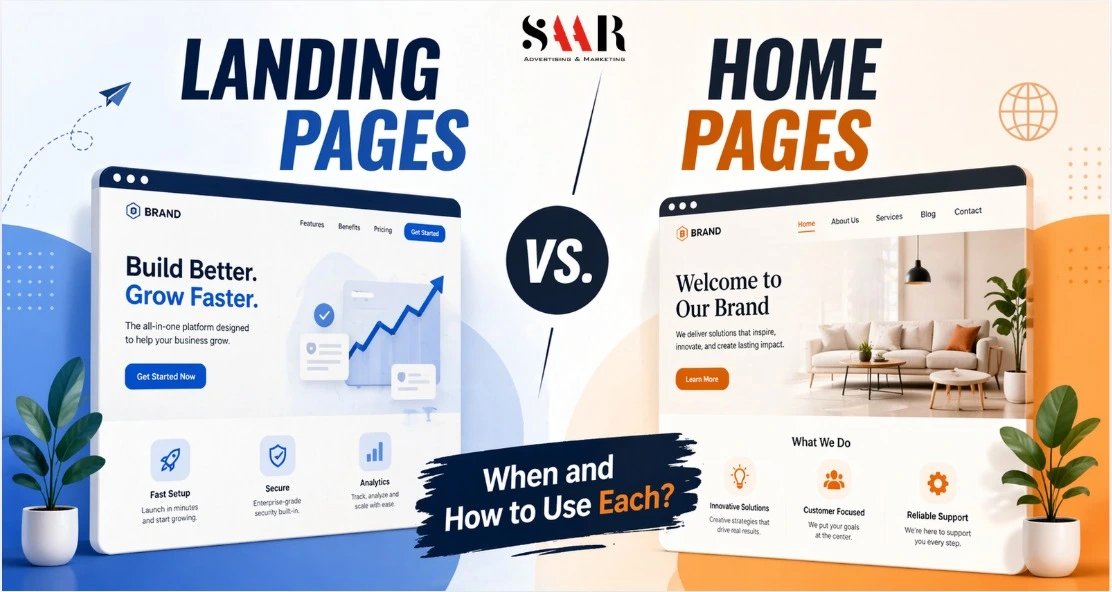
Landing Pages vs. Home Pages: When and How to Use Each
Published on: May 7, 2026
Many businesses lose valuable traffic because they send every visitor to their home page.
At first, it seemed like the right move. Someone clicks your ad, lands on your website, and sees your main page. But that can hurt your chances of getting results.
Think about it.
A person clicks an ad for a free consultation and lands on a page filled with menus, links, and too much information. Now they have to figure out where to click next or which service matches their needs. Most people won’t take that extra step. They leave.
And just like that, you lose a potential lead. This is where many businesses get it wrong.
A home page and a landing page may be part of the same website, but they are built for different purposes.
A home page gives visitors an overview. A landing page is focused on getting one action.
That action could be:
- Filling out a form
- Booking a call
- Downloading an offer
Everything on the page is designed around that single goal. When you send visitors to the right page, things work better. You can get more leads, waste less money on ads, and improve campaign performance.
Let’s break it down.
What Is a Home Page?
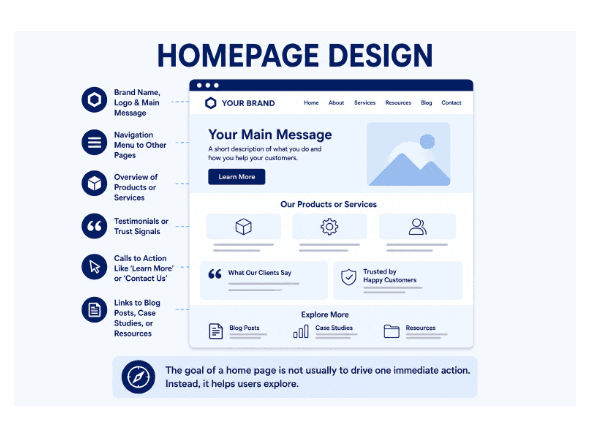
A home page is the main entry point of your website. It is the first page that the user is exposed to after they click on the blue links on Google.
When someone clicks your website link on Google or types your URL directly, this is often the first page they see. Think of it as your digital storefront or business card. It introduces your brand, explains what you do and helps visitors navigate to the information they need.
A typical home page includes:
- Your brand name, logo, and main message
- A navigation menu to other pages
- An overview of products or services
- Testimonials or trust signals
- Calls to action like “Learn More” or “Contact Us”
- Links to blog posts, case studies, or resources
The goal of a home page is not usually to drive one immediate action.
Instead, it helps users explore.
For example, if you run a digital marketing agency, your home page may introduce your:
- SEO services
- Social media marketing
- PPC services
- Web design services
Then guide users to the right page based on what they need.
In simple terms:- A home page is for discovery.
What Is a Landing Page?
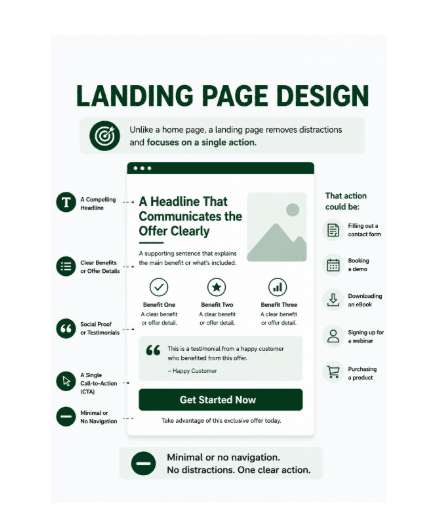
A landing page is a standalone web page designed for one specific purpose.
Visitors usually “land” on it after clicking an ad, email link, or social media promotion. Unlike a home page, a landing page removes distractions and focuses on one clear action.
That action could be:
- Filling out a contact form
- Booking a demo
- Downloading an eBook
- Signing up for a webinar
A landing page often includes:
- A compelling headline
- Clear benefits or offer details
- Social proof or testimonials
- A single call-to-action (CTA)
- Minimal or no navigation
For example:
If you’re running a Google Ads campaign for “Free SEO Audit,” the ideal destination is not your home page.
It’s a landing page specifically built around that offer, with a simple form and a strong CTA.
In simple terms:- Landing pages are for conversions.
Landing Pages vs. Home Pages: Key Differences
At first glance, they may seem similar. But their purpose and structure are very different.
| Landing Page | Home Page | |
| Purpose | Drives one specific action. | Educates visitors and helps them explore |
| Navigation | Removes extra navigation to reduce distractions. | Includes menus and multiple links. |
| Audience Intent | Targets a specific audience with focused intent. | Works for a broad audience with different goals.
|
| Traffic Source | Usually gets paid traffic, email traffic, or campaign-specific visitors. | Often gets direct, branded, or organic traffic.
|
| Conversion Rate | Higher conversion rate because it is focused. | Lower conversion rate because users are exploring.
|
When Should You Use a Home Page?
Your home page is the right choice when visitors need context.
Use your home page when:
You Want to Build Brand Awareness
If someone searches your business name, they likely want to know:
- What does this business do?
- Who is it for?
- Why should I trust it?
Your home page should answer these quickly.
You Offer Multiple Services or Products
A home page works well when visitors may need different solutions.
For example:
A law firm may offer:
- Family law
- Corporate law
- Real estate law
The home page can guide users to the correct service page.
You’re Targeting Organic Search and General Visitors
Visitors from search engines may not be ready to convert immediately.
They may want to:
- Read your blog
- Check reviews
- Compare services
A strong home page makes this easy.
When Should You Use a Landing Page?
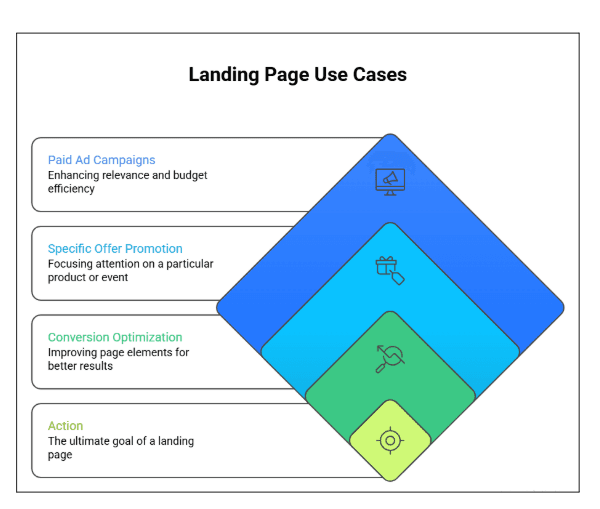
A landing page works best when your goal is action.
Use a landing page when:
You’re Running Paid Ads
Paid clicks are expensive.
Sending users to a generic page can waste your budget.
A focused landing page improves relevance and increases conversions.
Example:
Facebook Ad → “Get 20% Off Your First Order” → Landing Page with discount code and CTA
You’re Promoting a Specific Offer
Launching:
- A webinar
- A free guide
- A seasonal sale
A landing page keeps all attention on that one offer.
You Want Better Conversion Optimization
Landing pages are ideal for A/B testing:
- Headlines
- Images
- Forms
- CTA buttons
This helps improve performance over time, which is why landing page conversion optimization is so important for improving campaign results and maximizing every click.
How to Design an Effective Home Page
A good home page should guide users without overwhelming them.
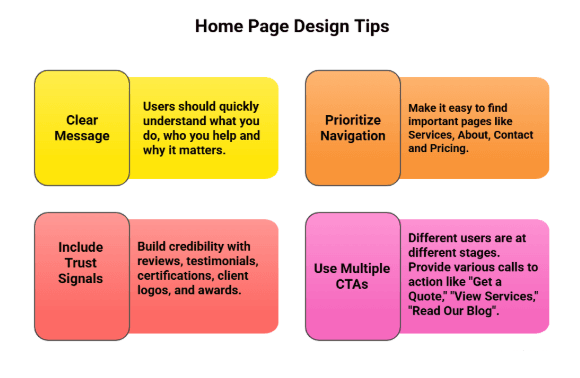
Keep Your Message Clear
Within seconds, users should understand:
- What you do
- Who you help
- Why it matters
Avoid vague slogans.
Instead of:
“Transforming Digital Experiences”
Say:
“We Build Websites That Generate Leads.”
Prioritize Navigation
Make it easy to find important pages like:
- Services
- About
- Contact
- Pricing
Good navigation improves user experience.
Include Trust Signals
Build credibility with:
- Reviews
- Testimonials
- Certifications
- Client logos
- Awards
Use Multiple CTAs
Different users are at different stages.
Examples:
- Get a Quote
- View Services
- Read Our Blog
How to Design an Effective Landing Page
A landing page should be simple and focused.
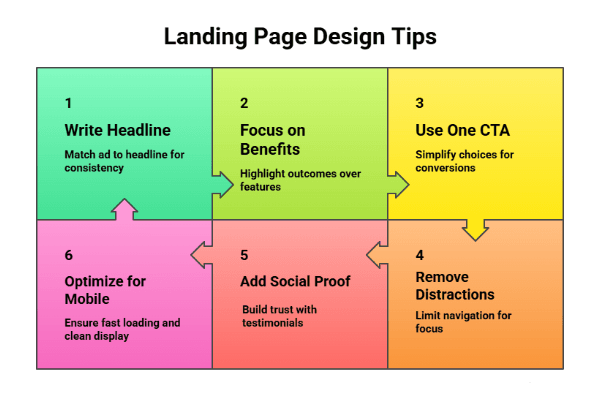
Write a Strong Headline
Your headline should match the ad or link that brought users there.
Consistency builds trust.
Example:
Ad says: “Download Free Social Media Calendar”
The landing page headline should say the same thing.
Focus on Benefits, Not Features
Explain outcomes instead of technical details.
Instead of:
“30-page eBook PDF”
Say:
“Learn how to get more leads from Instagram in 30 days.”
Use One CTA
Too many choices reduce conversions.
Pick one action:
- Download
- Sign up
- Book now
Remove Distractions
Limit navigation and unnecessary links.
Every extra option gives users a reason to leave.
Add Social Proof
Testimonials, case studies, and reviews can increase trust.
Optimize for Mobile
A large percentage of traffic comes from phones.
Your landing page should:
- Load fast
- Look clean on smaller screens
Can You Use Both Together?
Absolutely.
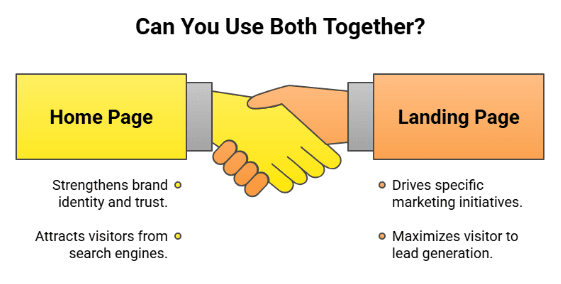
In fact, the best marketing strategies use both.
Your home page supports your brand and organic traffic. Your landing pages support campaigns and conversion optimization.
For example:- A user may first discover your business through a blog post, visit your home page, and later click a retargeting ad that takes them to a landing page.
That creates a smart customer journey.
At SAAR Asia, recognized by many as the Best Website Development Company in Dehradun, we help businesses create that journey by building home pages that strengthen trust and landing pages designed to convert visitors into leads.
The two pages are not competitors.
They work together.
Final Takeaway: Which One Should You Choose?
If your goal is to inform, build trust, and help users explore, use a home page.
If your goal is to drive one specific action, use a landing page.
A simple rule to remember:
Home page = exploration
Landing page = conversion
Choosing the right page at the right time can improve user experience, increase conversions, and make your marketing more effective. If you’re investing in ads, email campaigns, or lead generation, don’t send everyone to your home page by default. Sometimes the smallest change, like using the right page, can make the biggest difference.
Also Read: Essential Tips for Creating an SEO-Friendly Website Structure