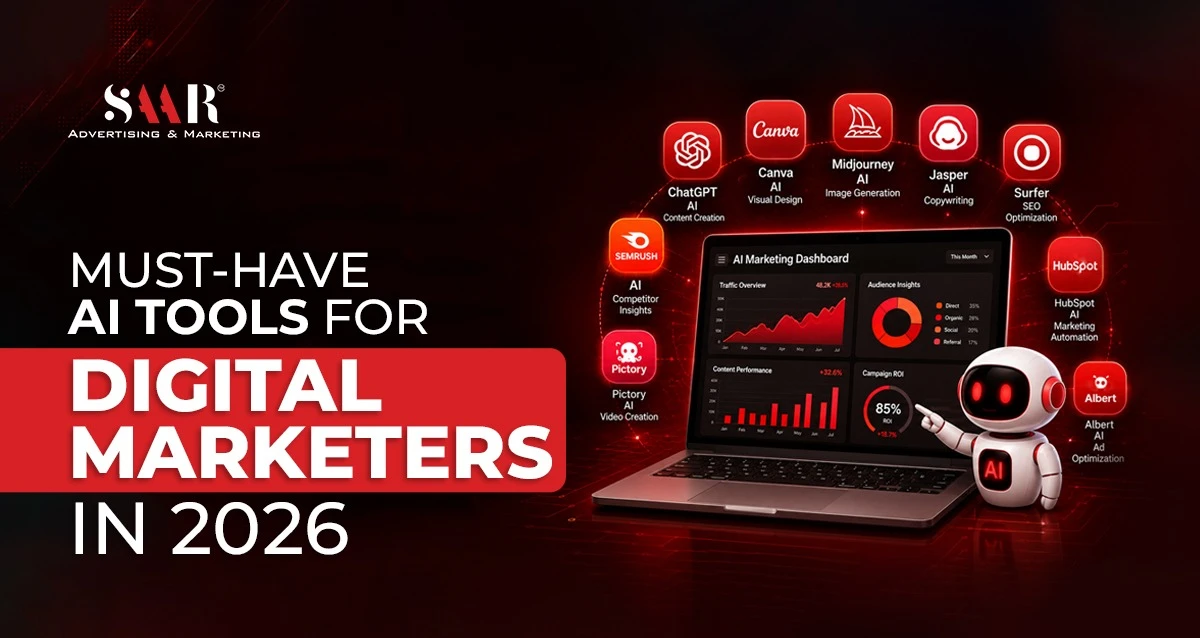
Digital marketing is rapidly evolving. By 2026, the best AI tools will provide marketers the power to think faster, brainstorm stronger ideas, analyse outcomes, and spend most of the time in the process on tasks the human mind is meant for. However, AI is meant to augment your team, not eliminate their need. It is up to them to find out all the relevant facts, comprehend your customers, and make every piece of the campaign communicate the authentic essence of your brand.
We'll talk about the best AI Tools for digital marketers in this guide, which will help you make your daily work way simpler without sounding robotic.
Why Digital Marketers Need AI in 2026
These days, marketers have their hands in managing content, seo, social, ads, emails, leads, and reports. AI helps in a first draft, in doing research, designing mockups, the manual work, and summarising the data. In plain language: you can respond faster and make a stronger plan.
Still, the best outcomes have come when you give AI clear directions, verify what’s provided, and then base final calls upon real campaign data.
1. ChatGPT for Ideas, Content, and Campaign Planning
The helpful part of using ChatGPT is that it's a great first draft place for ideas for the campaign, blog content outlines, social media, email copy, and short summaries of simple reports. Think about turning a single blog post topic idea into a whole week’s worth of content or brainstorm different directions for social media ads copy based on your target customers.
Use it well: Put your audience, offer, tone, location, and purpose. Then, you save the result and publish it. Do not copy-paste a first draft without verifying facts, spelling, and brand voice.
2. Canva Magic Studio for Fast Visual Content
Creating visual content takes a long time, especially making posts, ads, and presentations along with short videos. The new set of tools under Canva Magic Studio includes generating design ideas, resizing visuals for various platforms, removing excess elements from an image, and writing text for a layout.
Particularly beneficial for small businesses requiring a continuous stream of branded collateral. Ensure you stick to your brand’s color palette, typography, logo, and messaging so every piece of visual material resonates with your established brand identity.
3. Semrush AI Visibility Toolkit for Search Insights
SEO has gone beyond just googling. AI search tools and AI-generated results are the third way that people look for answers. This is where Semrush’s AI Visibility Toolkit comes in, revealing whether a brand appears in those answers, comparisons with competitors' visibility, and highlighting what topics are worth writing about.
Its unique solution makes it one of the best AI marketing tools for teams looking to enhance both search content and brand discovery. Use its insights to create genuinely useful content, rather than just content created for the sake of being on-trend.
4. HubSpot Breeze for Lead and Marketing Work
HubSpot Breeze introduces AI capabilities for marketing, sales, and customer interaction. This provides teams with tools to produce content, categorise customer information, and follow up with leads while eliminating repetitive tasks in their current system.
This approach is most effective in an environment where your contact data is clean and you have clear guidelines around who follows up. Define a series of approval steps for customer-facing messages to ensure that people still control important conversations.
5. Zapier Agents for Simple Automation
A lot of marketing tasks consist of transferring data between tools. A fresh lead from the website, for instance, may need to enter a spreadsheet, CRM, an email list, and team chat. Zapier Agents are capable of bridging these steps and automatically completing tasks that have been defined across various apps.
Get started with a no-risk job — like sending weekly reports on your campaign or sorting form leads. Nothing that modifies customer data or sends messages should be automated without testing it rigorously first.
6. Google Ads AI for Smarter Campaign Support
AI-driven solutions from Google Ads include Performance Max and AI Max for Search. The tools assist with bidding, campaign reach, and creative testing, providing a high-level overview of Google’s ad referral channels.
They are helpful, but they require strong input yet. The campaign needs precise conversion tracking, clear audience indications, quality creative assets, and something noteworthy on the landing page. Do not regard automation as “set and forget”; review performance regularly.
How to Choose the Right AI Tools
The Best AI tools for Digital Marketing are not feature-packed tools. Based on the problem you want to solve, choose tools.
• Need content ideas and drafts? Start with ChatGPT.
• Need graphics at speed? Try Canva Magic Studio.
• Want insights into SEO? Want to combine it uniquely with AI-search? Look at Semrush.
• Need lead management? Consider HubSpot Breeze.
• Need routine tasks connected? Use Zapier.
• Need support for paid campaigns? Use Google Ads AI features.
Do not subscribe to every new tool. Choose 1 or 2, have a SMART goal, and measure if that thing saves you time or makes things happen better. Retain a step in the process for human review around facts, design quality, customer messages, and campaign decisions.
Final Thoughts
As with all tools, the right AI Tools for Digital Marketers will allow teams to work faster, but they still do not substitute a good marketing strategy, creativity, and understanding of People. Let AI take home the low-hanging work, discover actionable insights, and spin better ideas through experimentation—not publishing stuff without reading it first.
If you want experience-based practice instead of hope-based hype, SAAR Asia is a good bet for AI-supported marketing automation. The team performs research, analysis, planning, and execution across SEO, social media, paid ads, websites, and creative work. And that balanced approach allows brands to harness the power of AI for a greater purpose while keeping campaigns sound, cohesive, and aligned with tangible business objectives.
Also read: How AI is Reshaping Content Creation and Advertising in 2026