Creating an amazing event is only one part of the story; the true difficulty is in ensuring that the event gets filled. Whether you are organizing a critical corporate meeting, a specialized industry conference, or even an extensive consumer expo, the success of your event depends completely on how visible you can make yourself. In today’s highly saturated digital environment, hoping to get results from organic posts and word of mouth is not going to get you where you need to be. Organic marketing takes time, and for something like an event, time is definitely not your friend.
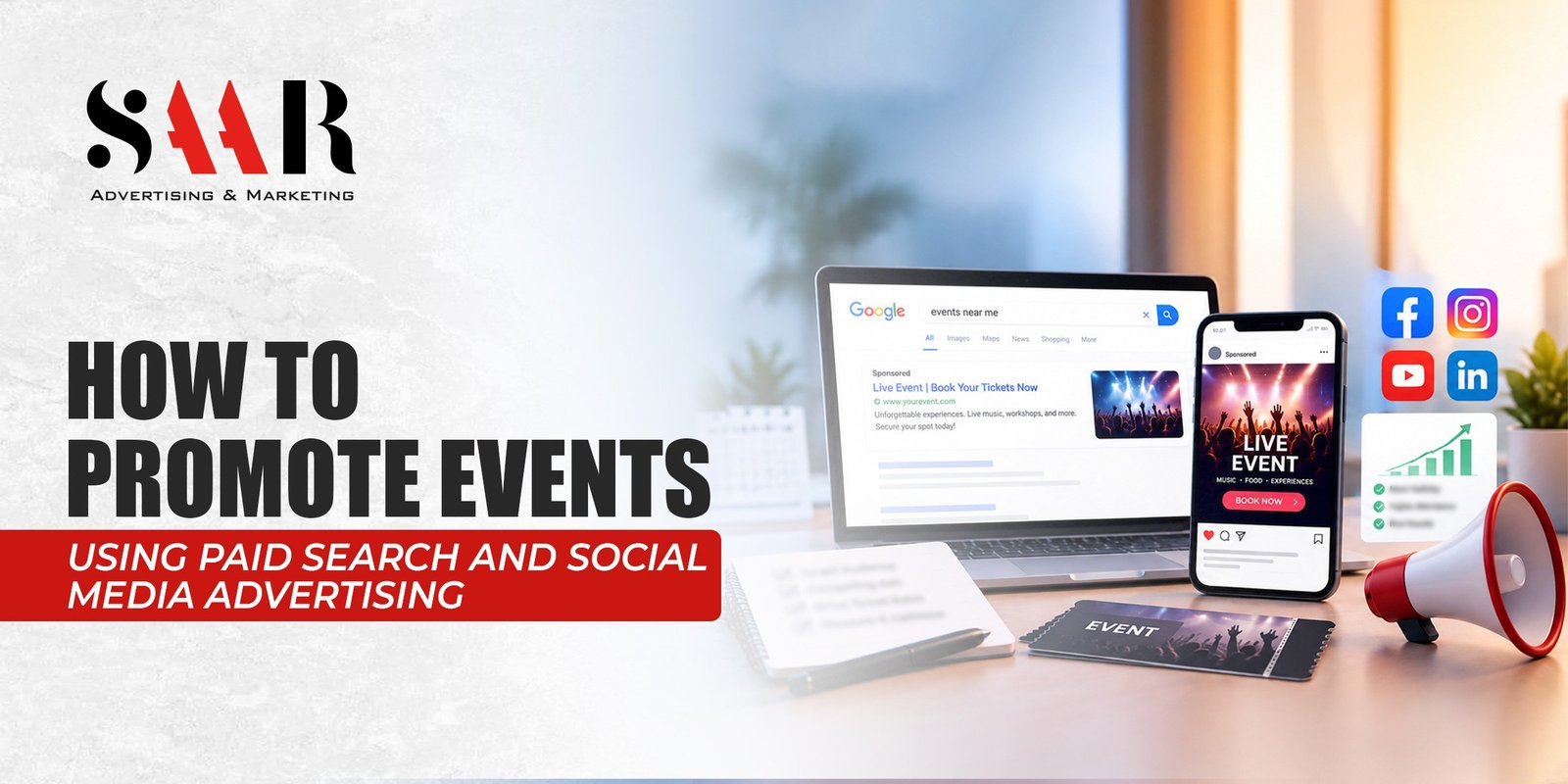
Mastering the art of how to promote an event online is not a simple task and involves adopting a methodical, multi-faceted approach. However, there is one thing to keep in mind when using paid advertising to market events – it is different from managing paid media budgets of any regular e-commerce product. You are not selling a tangible good but selling a transient experience. This one element will dictate everything else, right from your marketing strategies to measuring success. Utilizing the dual strength of paid search and social networking sites will make all the difference.
Start With the Objective, Not the Platform
Campaigns for events usually serve one of three strategic purposes, each requiring completely distinct campaign architectures within your ad account:
• Ticket Sales: These require optimization for conversions directed toward a dedicated registration or checkout page. This is pure direct-response marketing tied to a strict, non-negotiable deadline.
• Awareness: This applies specifically to launch announcements and major expos where the final sale might happen offline. Here, the primary objective is buying broad market reach and brand recall, not immediate clicks.
• Attendance and Engagement: This covers reminders, schedule announcements, and speaker reveals targeted at individuals who have already registered, engineered specifically to maximize final show-up rates.
The most effective marketing funnels systematically layer all three of these objectives across a unified timeline, rather than running them simultaneously without any separation.
Paid Search: Capture Demand That Already Exists
Google Ads, or paid search ads, are your best option if you want to target people looking specifically for your type of event. This is far more effective than social media surfing, because with search intent, it means that the person is at a much deeper level in the decision-making process.
A few operational details separate campaigns that work from those that burn budget:
• First, Target Your Brand Terms: Always target your event name and brand terms first. It is cheap, captures high-intent traffic, and prevents any of your competitors from taking advantage of your search volume.
• Use Specific Keyword Clusters: Target highly specific keyword clusters using your industry niche combined with event-specific terms (such as a "corporate leadership seminar"). Be cautious of using broad match; typically, an account with tightly controlled phrase and exact match keywords significantly outperforms a sprawling broad-match account.
• Use Ad Assets and Extensions: Utilize sitelinks and structured snippets to guide your audience directly to critical pages of your event like "Agenda," "Speaker Lineup," or "FAQs," answering common questions before the click.
• Create Logistical Ad Copy: In order to make your ad copy work, you should explicitly state the date, city, venue, and ticket pricing. Searchers look for logistical metrics, not vague adjectives. Use dynamic countdown customizers within your headlines to showcase real-time alerts like "Early Bird Pricing Ends in 3 Days!" to leverage scarcity.
• Route Your Searchers to a Dedicated Landing Page: Never drop a searcher onto the general homepage of your website. Each event needs its own page with one clear action only. Always set an end date for the campaign to switch it off automatically on the morning of the event.
Search will never generate demand where there was no one searching for the product or service before. Paid social has to do this heavy lifting first, and search becomes closer once awareness builds.
Paid Social: Create Demand and Amplify What Works
While search satisfies current demand, social media advertising creates new demand. You will get an opportunity to reach those people who may not be actively looking for your event, yet perfectly suit the requirements of the ideal attendee. Here, you will generate new interest, try different message perspectives, and then retarget your prospects.
• Layering Your Audience: First, you will start with the targeting of interests and behaviors based on adjacent activities of people who are following similar events or groups, as well as engaging with your competitors' pages. If you hold a professional summit, use LinkedIn for B2B targeting of your audience based on job position, company size, level, and specific industry groups. Next, create lookalike audiences based on your past ticket buyers and/or email list.
• Create a Layered Retargeting Funnel: Buying tickets is not likely to happen on the first touch. People will see your prices, your registration link, and leave. Unless you follow up and make sure you get these users back at least once, you will lose them forever. Create a custom pixel for your website to target all those who abandoned the registration process. Use retargeting banners with unique “last chance” discount codes, spokesperson info, or logistics to remove any buying doubts.
• Let Creative Drive Scrolling: Powerful visuals work better than anything else on Meta platforms (Instagram & Facebook). Video beats static images almost anywhere. Show behind-the-scenes content from your past events, dynamic reels from your speakers, or video testimonials from your past attendees to build up instant social proof. Short vertical video works better than long horizontal ones for cold traffic. Test different creative approaches and eliminate losers fast.
• Time Your Flight, Don't Spread It Out: Break your campaign timeline down into distinct phases: announcement, early bird, final push, and last call. Give each phase its own weighting within the budget and its own message. Doing everything six weeks out front is a waste of money since the people you’re trying to influence don’t even know what decision they have to make.
The Mechanics That Decide Whether It Works
Some small things will decide your performance marketing success:
• Clean Tracking and Measurement: Make sure your conversion pixels and UTM parameters are all set up correctly before spending any dollars. You won't be able to optimize otherwise.
• Attribution Windows: Events take into account the consideration period. Click attribution windows tend to be 7 days on average, but may undervalue social contributions. Learn your platform's attribution windows.
• Don't Be Too Tied Up to Your Budget Plan: It never survives once it meets an actual audience. If early-bird kills, move all of your budget there right away. If a certain approach doesn't work, reallocate the budget right away.
• Start With Organic Content: The posts that do well organically have the best chance of working well when paid. Let your organic audience pre-select your paid posts.
• Coordinate With Email Marketing: Paid marketing gets the crowd warmed up; email marketing is where the action happens. Event campaigns combining paid tracking and email marketing outperform both channels individually.
• Remember the After-Event Campaign: A simple after-event campaign including a highlight video and “next edition” teaser turns former attendees into a warmed-up crowd for your future events at a tiny fraction of the initial price.
• Perfect the Registration Experience: No amount of money spent on advertising can help an ineffective registration process. Your platform should work like a smooth sales machine. Make sure that the event date, location, and obvious call-to-action buttons are visible at the top of your website. Make your registration form as small as possible—the more information you request from a visitor, the fewer chances of getting converted.
Common Mistakes Worth Avoiding
Running the same exact creative for six consecutive weeks without any changes whatsoever.
• Choosing reach over intent-based reach.
• Driving paid traffic to a non-optimized or mobile-unfriendly registration page.
• Terminating the campaigns on the day of the event instead of moving into on-site engagement mode.
• Considering search and social as separate marketing funnel stages rather than two parts of one channel.
Final Thoughts
Event promotion is an area that involves risks and deadlines. There is no margin for error; there is no second chance; there is no room for campaigns that seem active but don't sell tickets. It is all about knowing how paid search works together with paid social media, how to design the campaign timeline from announcement to last call, and how to analyze data and make necessary decisions instantly.
This combination of strategic planning and evidence-based, rapid action is precisely what makes SAAR Asia unique. As a top-of-the-line performance marketing agency, we combine cutting-edge paid search campaigns and very targeted social media marketing for events aimed at achieving tangible results. Search and social marketing do not work separately at SAAR Asia; both types of marketing form an integrated system depending on the exact date of your event and its revenue objectives.
If you are tired of investing a lot of money into campaigns that create a lot of buzz but no actual attendees, then SAAR Asia is the right place to contact. The thing is that with us, you will get an agency that knows everything about paid advertising for events and implements that operational knowledge with absolute discipline, real-time optimization, and precision to ensure every dollar is held accountable to a measurable result.
Also Read: Social Media Marketing Services in Dehradun: What to Expect